Workplace injuries can happen in any environment — from offices and schools to warehouses, construction sites, and retail settings. Knowing how to respond quickly and correctly is essential for keeping people safe and ensuring your organisation meets its health and safety responsibilities. At Flowers Training, we deliver accredited first aid courses across Essex, Suffolk, Cambridgeshire and Hertfordshire, giving teams the confidence to act when it matters most. Here’s a clear and practical guide to handling the most common workplace injuries.
1. Cuts, Grazes and Minor Bleeding
Cuts and minor wounds are among the most frequent workplace incidents. Whether caused by tools, equipment, or simple slips, they need immediate attention to prevent infection.
How to respond:
Wash your hands or put on gloves before helping.
Apply pressure with a sterile dressing to stop the bleeding.
Clean the wound with clean water and apply a plaster or dressing.
If bleeding continues or the cut is deep, seek medical attention.
Key tip: Every workplace should have a fully stocked HSE-compliant first aid kit and trained first aiders available.
2. Sprains, Strains and Musculoskeletal Injuries
Lifting, carrying, repetitive movements, and awkward postures can all lead to sprains and strains. These injuries are common in manual-handling environments but can happen anywhere.
How to respond (R.I.C.E.):
Rest the injured area.
Ice applied for 20 minutes at a time can reduce swelling.
Compression using an elastic bandage may help support the area.
Elevation reduces swelling and discomfort.
If there is severe pain, deformity, or inability to move the limb, treat it as a potential fracture and seek medical help immediately.
3. Burns and Scalds
Burns can occur from hot liquids, steam, chemicals, or electrical sources. Correct first aid is vital for reducing tissue damage.
How to respond:
Cool the burn under cool running water for at least 20 minutes.
Remove jewellery or clothing near the burn (unless stuck to the skin).
Cover the burn with a sterile, non-fluffy dressing or cling film.
Never apply creams, ice, or butter.
Seek medical attention for large burns, burns on the face, hands, or genitals, or any chemical or electrical burns.
4. Slips, Trips and Falls
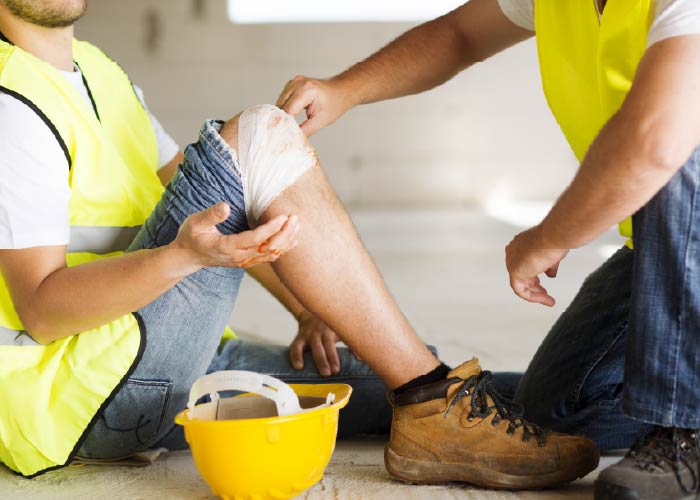
These incidents can result in bruises, sprains, fractures, or head injuries. Even a simple fall must be treated carefully.
How to respond:
Check for responsiveness and obvious injuries.
If there is a suspected head, neck, or spine injury, do not move the person unless they are in danger.
Apply first aid for cuts or sprains as needed.
Seek medical help if the person loses consciousness, vomits, or shows signs of concussion.
- Eye Injuries
Dust, chemicals, or foreign objects can easily enter the eye in busy workplaces.
How to respond:
- If it’s dust or debris, encourage the person not to rub their eye.
- Rinse the eye with clean water or sterile eyewash.
- For chemical splashes, irrigate continuously for at least 20 minutes.
- Seek urgent medical help if the irritation continues or chemicals are involved.
Why First Aid Training Matters
Employers are legally required to make “adequate and appropriate” first aid provision under UK Health and Safety regulations. Beyond compliance, proper first aid training helps staff respond confidently, reduces the severity of injuries, and creates a safer working environment.
At Flowers Training, we deliver fully accredited First Aid at Work, Emergency First Aid, Paediatric First Aid, and bespoke workplace courses. If your team needs practical, hands-on training delivered by an experienced instructor, we’re here to help.
Book your course today and give your workplace the skills that save lives.