Maintaining a well-stocked workplace first aid kit is essential for keeping your employees safe and ensuring compliance with UK regulations. In 2025, first aid kits are more than a collection of bandages—they’re a critical component of workplace safety. This guide will help you understand what items are essential, how to maintain your kit, and how training can enhance its effectiveness.
Why a Well-Stocked First Aid Kit Matters
Every business, whether small or large, has a duty of care to its employees and visitors. A first aid kit in the workplace ensures that minor injuries can be treated quickly, and life-threatening situations can be managed until professional help arrives. According to the Health and Safety Executive (HSE), all workplaces must have adequate first aid provisions, which include accessible, fully stocked first aid kits.
Essential Items for Every Workplace First Aid Kit in 2025
Modern first aid kits go beyond plasters and sterile dressings. Here’s what your kit should include:
- Dressings and bandages – Sterile dressings, triangular bandages, and wound pads are fundamental for treating cuts and abrasions.
- Haemostatic dressings and tourniquets – These items are critical for controlling severe bleeding. For guidance, see our Life-Threatening Bleeds blog.
- CPR face shields and gloves – Personal protective equipment protects both the rescuer and the casualty.
- Adhesive plasters and antiseptic wipes – For minor injuries and preventing infections.
- Eye wash solution – Essential in environments where chemicals are present.
- Automated External Defibrillator (AED) – Increasingly considered a workplace essential, particularly in large offices or public-facing businesses.
Maintenance Tips for Your First Aid Kit
A kit is only useful if it is properly maintained. Follow these steps to keep your first aid kit in top condition:
- Regular inspections – Check contents monthly to ensure items are complete and in date.
- Restocking after use – Replace any items that have been used immediately.
- Record-keeping – Maintain a log of inspections and updates to demonstrate compliance.
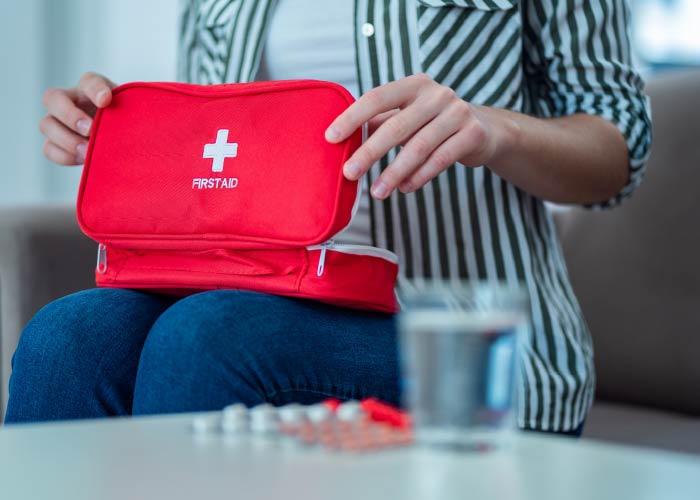
Adapting Your Kit to Different Work Environments
Workplaces vary, and your kit should reflect the risks in your environment. Offices may need basic items, while construction sites, transport companies, and outdoor operations require more advanced supplies. For example, drivers and passenger transport staff benefit from portable first aid kits tailored to roadside emergencies. You can explore these options through our First Aid at Work courses.
How Training Enhances Kit Effectiveness
Even the best first aid kit is only as good as the people using it. Training staff through courses like Emergency First Aid at Work or Paediatric First Aid ensures they know how to respond correctly and confidently. Staff who are trained are more likely to act promptly during emergencies, reducing the severity of injuries and potentially saving lives.
Conclusion
In 2025, a workplace first aid kit is a vital tool for compliance, safety, and peace of mind. By including essential items, maintaining your kit, and ensuring staff are trained, your business can be better prepared for any emergency. To enhance your workplace safety, consider booking one of our First Aid at Work courses today.