In an emergency situation, few conditions are as urgent as a life-threatening bleed. A catastrophic haemorrhage can cause rapid blood loss, leading to shock, organ failure, and ultimately death if not managed quickly. Unlike a minor cut or graze, a severe bleed requires immediate intervention. The ability to control bleeding before professional help arrives is a vital skill that can truly save lives.
What Is a Life-Threatening Bleed?
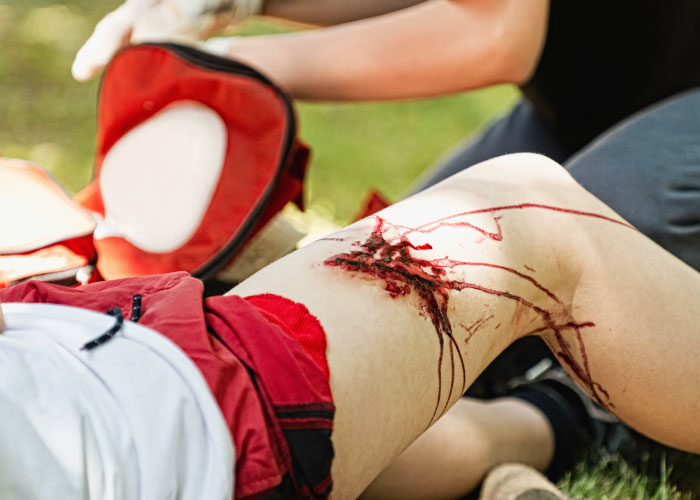
A life-threatening haemorrhage occurs when the body loses a large amount of blood in a short period of time. This can happen through trauma or from a serious medical condition. Common causes include:
- Road traffic collisions
- Industrial or workplace accidents
- Stabbings or gunshot wounds
- Falls or crush injuries
- Medical emergencies such as ruptured blood vessels or gastrointestinal bleeds
Unlike superficial wounds, major bleeding overwhelms the body’s natural clotting ability, making urgent action essential.
Signs of Severe Haemorrhage
Recognising the signs of a catastrophic bleed is crucial. Indicators include:
- Spurting or uncontrolled flow of blood
- Blood soaking through dressings or clothing
- Visible pooling of blood on the ground
- Pale, cold, or clammy skin
- Dizziness, confusion, or collapse
- Weak or rapid pulse and shallow breathing
Any of these symptoms should be treated as a medical emergency.
First Aid for Life-Threatening Bleeds
The goal in first aid is always to stop the bleed. The internationally recognised Stop the Bleed programme emphasises that anyone can learn the skills to control haemorrhage. Key steps include:
- Call 999 immediately – Activate the emergency services without delay.
- Apply firm direct pressure – Use your hands, a bandage, or a clean cloth to press hard on the wound.
- Use a tourniquet when appropriate – For severe bleeding from an arm or leg that cannot be controlled with pressure alone, apply a commercial tourniquet above the injury site.
- Pack deep wounds – Where bleeding is from a cavity or junctional area (such as the groin or armpit), pack the wound tightly with gauze or cloth and continue applying pressure.
- Prevent shock – Keep the casualty calm, lay them flat, cover them to maintain warmth, and monitor their breathing until help arrives.
Why Speed Matters
A person suffering from a major haemorrhage can bleed to death in only three to five minutes. Prompt action to control bleeding makes a dramatic difference to survival rates. This is why bleeding control training is now considered as essential as learning CPR.
Being Prepared Saves Lives
Many workplaces, schools, and public venues are beginning to install bleeding control kits alongside defibrillators. These kits contain tourniquets, haemostatic dressings, and trauma bandages, all designed to manage catastrophic haemorrhage. Community awareness and training ensure that ordinary people can take life-saving action before paramedics arrive.
Final Thoughts
A life-threatening bleed is one of the most critical medical emergencies. Recognising the signs of severe haemorrhage and knowing how to use pressure, wound packing, and tourniquets can save a life. By learning the principles of bleeding control and supporting initiatives such as Stop the Bleed, we can all be better prepared to act swiftly and effectively when it matters most.